Yes — at least basic Indonesian. While English works in Canggu/Ubud cafés and coworking spaces, you will save 30-50% on prices (scooter rentals, warung meals, kos rooms, marketplaces), navigate KITAS visa offices smoother, and integrate with locals who speak limited English. The realistic goal is A1-A2 level in 30-90 days: enough to bargain, order food, give scooter directions, and handle bank/visa paperwork. Bahasa Indonesia is one of the easiest languages for English speakers — no tones, no conjugations, no gendered nouns — so 20-30 min/day yields quick wins.
The Bali digital nomad ecosystem (Canggu, Ubud, Uluwatu, Sanur) often gives the impression that English is enough. It is — for the tourist bubble. But every nomad who stays 3+ months hits the same realization: knowing even basic Indonesian transforms daily life.
Where English actually fails
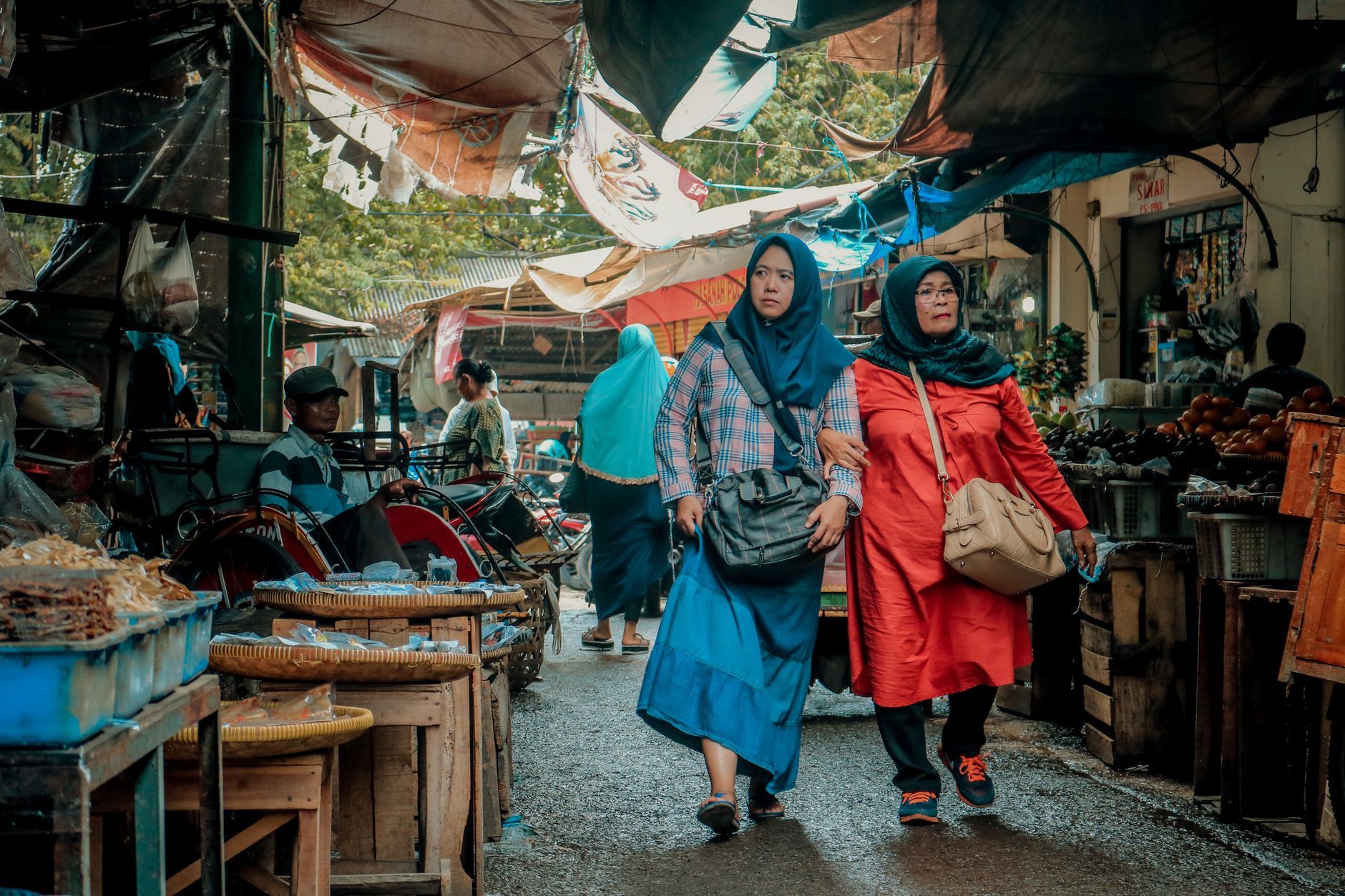
- Local warungs and night markets — owners speak minimal English. You get a different menu/price.
- Long-term kos (boarding) rentals — most landlords are local Balinese/Javanese. Negotiating monthly rates without Indonesian is hard.
- Scooter rentals from local Bli (not the Western-priced rental shops) — 50-70k IDR/month vs 1-1.5M IDR if you go through a Western middleman.
- KITAS / KITAP visa renewals — immigration officials prefer Indonesian. Smoother appointments, faster processing.
- Banks, ATMs, post offices, public hospitals — staff speak basic English at best.
- Police interactions — even friendly stops at scooter checkpoints go better in Indonesian.
- Marketplace bargaining (Sukowati, Ubud, traditional warungs) — 30-50% price difference between bule (foreigner) English and locally-spoken Indonesian.
The realistic 30-90 day plan
Days 1-7: Survival basics
- Greetings (Selamat pagi, Apa kabar, Terima kasih)
- Numbers 1-100 (essential for prices, addresses)
- Pointing + "Ini berapa?" (how much is this?)
- "Tolong" (please) and "Maaf" (sorry/excuse me)
- Food orders: "Mau ini, satu" (I want this, one)
Days 8-30: Functional A1
- Directions: kiri, kanan, lurus, di sebelah
- Days of week, time expressions
- Scooter vocab: bensin (petrol), pertamax, helm, sewa
- Kos vocab: kamar (room), kamar mandi (bathroom), AC, wifi, bulanan (monthly)
- Bargaining: "Bisa kurang?" (can you reduce?), "Terlalu mahal" (too expensive)
Days 31-90: A2 with personality
- Past/future markers: sudah, belum, akan, sedang
- Coworking small talk: "Lagi kerja remote", "Saya freelance"
- Visa/immigration: KITAS, SKLD, paspor, visa kunjungan, masa tinggal
- Polite refusals: "Tidak, terima kasih" (no thanks), "Lain kali" (next time)
- Banter with regulars: "Pak/Bu, biasanya yang sama, ya" (the usual, please)
Where Bali nomads cluster — and the language reality
- Canggu / Berawa — most English-heavy. You can survive without Indonesian, but warung prices stay double. ~50% of locals speak conversational English.
- Ubud — balanced. More traditional Balinese culture exposure. Indonesian helps with cultural integration (yoga teachers, Bali healers, traditional markets).
- Uluwatu — surf community. English-heavy among nomads. Indonesian needed for kos and longer stays.
- Sanur — older expat / retiree crowd. Slower pace, more local interaction. Indonesian increasingly necessary.
- Lombok (Kuta, Selong Belanak) — far less English than Bali. Indonesian close to mandatory after a week.
- Yogyakarta — growing nomad scene. Almost no English outside Malioboro tourist strip. Indonesian essential.
Practical money savings — real numbers
| Item | English / bule price | Indonesian price | Savings |
|---|
| Scooter rental (monthly) | 1,200,000 IDR | 700,000 IDR | ~40% |
| Kos room (monthly, Canggu) | 9,000,000 IDR | 6,500,000 IDR | ~28% |
| Warung nasi campur | 45,000 IDR | 25,000 IDR | ~45% |
| Sukowati art market batik | 500,000 IDR | 200,000 IDR | ~60% |
| Taxi airport to Canggu | 400,000 IDR | 250,000 IDR | ~38% |
Over 6 months in Bali, basic Indonesian conservatively saves $1,500-3,000 USD. The opportunity cost of not learning is real.
Renting a scooter: "Pak, sewa motor sebulan, harganya berapa?" — "Lima ratus ribu, Mas." — "Bisa kurang? Empat ratus aja." — "Oke, empat ratus lima puluh."
Sir, monthly scooter rental, how much? — 500K. — Can you reduce? 400. — OK, 450.
Classic Bali bargaining flow.
Warung order: "Mbak, nasi campur ayam satu, es teh manis satu, pakai sambal, ya. Bayar berapa?" — "Tiga puluh lima ribu, Mas."
Miss, one mixed rice with chicken, one sweet iced tea, with sambal please. How much? — 35,000.
Standard daily order.
Kos viewing: "Halo, Bu. Saya tertarik dengan kos bulanannya. Bisa lihat kamarnya hari ini?" — "Bisa, Mas. Jam berapa?" — "Sore, jam empat boleh?"
Hello, ma'am. I'm interested in the monthly room. Can I see the room today? — Sure. What time? — Afternoon, 4 PM OK?
Professional but warm tone.
Coworking small talk: "Lagi kerja remote, Pak. Saya freelance designer dari Jerman." — "Wah, keren! Sudah berapa lama di Bali?"
I'm working remotely. I'm a freelance designer from Germany. — Cool! How long have you been in Bali?
Indonesian for "How long" = "Berapa lama".
Immigration office: "Selamat pagi, Pak/Bu. Saya mau perpanjang KITAS saya. Ini paspor saya dan dokumen yang diminta." — "Silakan duduk, akan diproses."
Good morning. I want to extend my KITAS. Here's my passport and the requested documents. — Please sit, it will be processed.
Formal register at government offices.
ATM trouble: "Mas, ATM-nya tidak keluar uang. Saya tarik tunai, tapi gagal." — "Coba cek mutasi rekening dulu, Bu. Mungkin sudah ke debit."
The ATM didn't dispense money. I tried to withdraw but it failed. — Try checking the account history first. Maybe it was already debited.
When tech goes wrong.
Police scooter stop: "Selamat sore, Pak. Tolong tunjukkan SIM dan STNK." — "Maaf, Pak. Saya pakai SIM internasional, ini paspornya."
Good afternoon, sir. Please show your license and registration. — Sorry, sir. I'm using an international license, here's my passport.
SIM = driver's license; STNK = vehicle registration.
Learning Indonesian is one pillar. The other is understanding the cultural undercurrent of expat life in Indonesia — what gets you respect vs what marks you as another "bule" (foreigner) passing through.
The "bule" reality
Bule means foreigner (literally "albino" — referring to pale skin). It is not derogatory but it is a label. Speaking Indonesian, even imperfectly, is the fastest way to be seen as "bule yang baik" (good foreigner) rather than just another tourist.
Practical respect markers
- Greet with title — never bare "Hi". Use "Selamat pagi, Pak/Bu/Mas/Mbak".
- Take off shoes at warungs/homes — even open-air warungs may have a "lepas sepatu" (remove shoes) area.
- Don't touch heads or point with feet — head is sacred, feet are profane in Balinese-Javanese culture.
- Right hand for giving/receiving — left hand is considered impure (toilet hand).
- Patience with slow pace — "jam karet" (rubber time) is real. Schedules are flexible.
- Tip 5-10% in restaurants if no service charge. Round up taxi/scooter fares.
- Avoid public anger — losing temper in public ("emosi") is shameful for the loser, not the cause.
KITAS / visa landscape (2026)
- Visa on arrival (VOA) — 30 days, extendable once to 60. ~$35 USD.
- B211A visit visa — 60 days, extendable 2x to 180 days. Sponsor required.
- Second home visa — 5-10 years for high deposits ($130K+ in Indonesian bank).
- Remote worker / digital nomad visa (E33G) — 1 year, multiple entry, for verified remote employment outside Indonesia. Launched 2024.
- Investor / KITAS — for those starting Indonesian PT companies.
The remote worker visa specifically targets digital nomads. Indonesian skill helps with applications and renewals.
Coworking and community
Major Bali coworking spaces (Dojo, Outpost, Tropical Nomad, BWork) operate in English but staff are local. Building rapport with Indonesian colleagues unlocks:
- Insider tips on neighborhoods, prices, immigration agents.
- Local friend networks (way deeper than expat networks).
- Trusted recommendations (dentist, mechanic, contractor).
- Birthday/family invites that turn an expat year into a real life.
Common nomad mistakes
- Refusing to learn because "English is enough" — true for tourist transactions, false for everything else.
- Trying to learn Balinese instead of Indonesian — wrong priority. Indonesian is universally understood; Balinese is regional and harder.
- Loud bargaining — Indonesians bargain softly with smiles. Aggression marks you as bule kasar (rude foreigner).
- Treating local prices as cheating — the gap between "bule price" and "local price" exists everywhere in tourist economies. Speak Indonesian, get local price. No drama.
- Ignoring religious customs — Bali has thousands of ceremonies; nomads who learn even the names (Galungan, Nyepi, odalan) integrate faster.
- Underestimating visa runs — they cost time and money. Learning the visa vocabulary saves both.
Can I really save money by speaking Indonesian in Bali?+
Yes — measurably. Scooter rentals, warung meals, kos rooms, and especially traditional marketplaces have a "bule tax" of 20-60% above local prices. Speaking Indonesian removes most of this gap, even if your Indonesian is imperfect. The effort signals respect, and locals respond with fair prices.
What level of Indonesian do I need for Canggu/Ubud?+
A1-A2 (basic conversational) is enough for daily life: ordering, bargaining, directions, small talk. B1 (intermediate) lets you negotiate kos contracts, handle banks/visa, build friendships with local staff. For deeper integration (Indonesian friends, business deals), aim for B2.
How long until I'm functional?+
With 20-30 minutes/day of focused study (apps like IndoLingua, plus practice with locals), most nomads reach A1 in 30 days, A2 in 60-90 days. Indonesian is one of the easiest languages for English speakers — no tones, no conjugations, no genders. Progress is fast if you use it daily.
Do I need to learn Balinese if I live in Bali?+
No. Balinese is the regional language of Bali, but every Balinese person under 60 speaks fluent Indonesian. Schools, government, business, tourism all run in Indonesian. Balinese is added for cultural depth if you marry into a Balinese family or live in a traditional village. For nomads in Canggu/Ubud/Uluwatu, Indonesian is the priority.
Will locals laugh at my Indonesian?+
Indonesians are generally extremely supportive of foreigners trying their language. Mistakes are met with patience and warm corrections, not mockery. The bigger risk is the opposite: locals refusing to switch to Indonesian because they assume you can't handle it. Persist with Indonesian; they will adjust.
What's the best Indonesian app for nomads?+
For nomad-specific contexts (warungs, scooters, visas, bargaining), look for an app that teaches contemporary spoken Indonesian rather than only formal Bahasa Baku. IndoLingua focuses on real-world scenarios for travelers, expats, and nomads. Combine app learning with daily real-world practice (warung orders, taxi rides) for fastest progress.
Learn the Indonesian a Bali nomad actually needs
IndoLingua teaches the daily Indonesian for kos rentals, warung orders, scooter bargaining, and KITAS appointments — not textbook drills. Free plan: 10 lessons. Full 3-day trial: card required, nothing charged during the trial.
Start learning free