It depends on your trip length and goals. For a 1-week tourist visit, learning 20-30 phrases is enough — most Balinese in tourist areas speak English. For a 2-4 week trip, basic A1 (50-100 hours) unlocks better experiences and respect from locals. For 1+ month, expats, or digital nomads, Indonesian is essential — it transforms how locals treat you, halves the prices you pay, and opens authentic friendships.
Most travelers ask this question because they've heard "everyone in Bali speaks English." That's only partially true. Here's the honest breakdown.
The English-coverage reality in Bali
- Tourist hubs (Kuta, Seminyak, Ubud, Canggu) — 80-90% of staff in restaurants, hotels, and shops speak basic English. You can survive without a single word of Indonesian.
- Off-the-beaten-path (Amed, Munduk, Nusa Penida villages, North Bali) — 30-50% English coverage. Indonesian becomes useful.
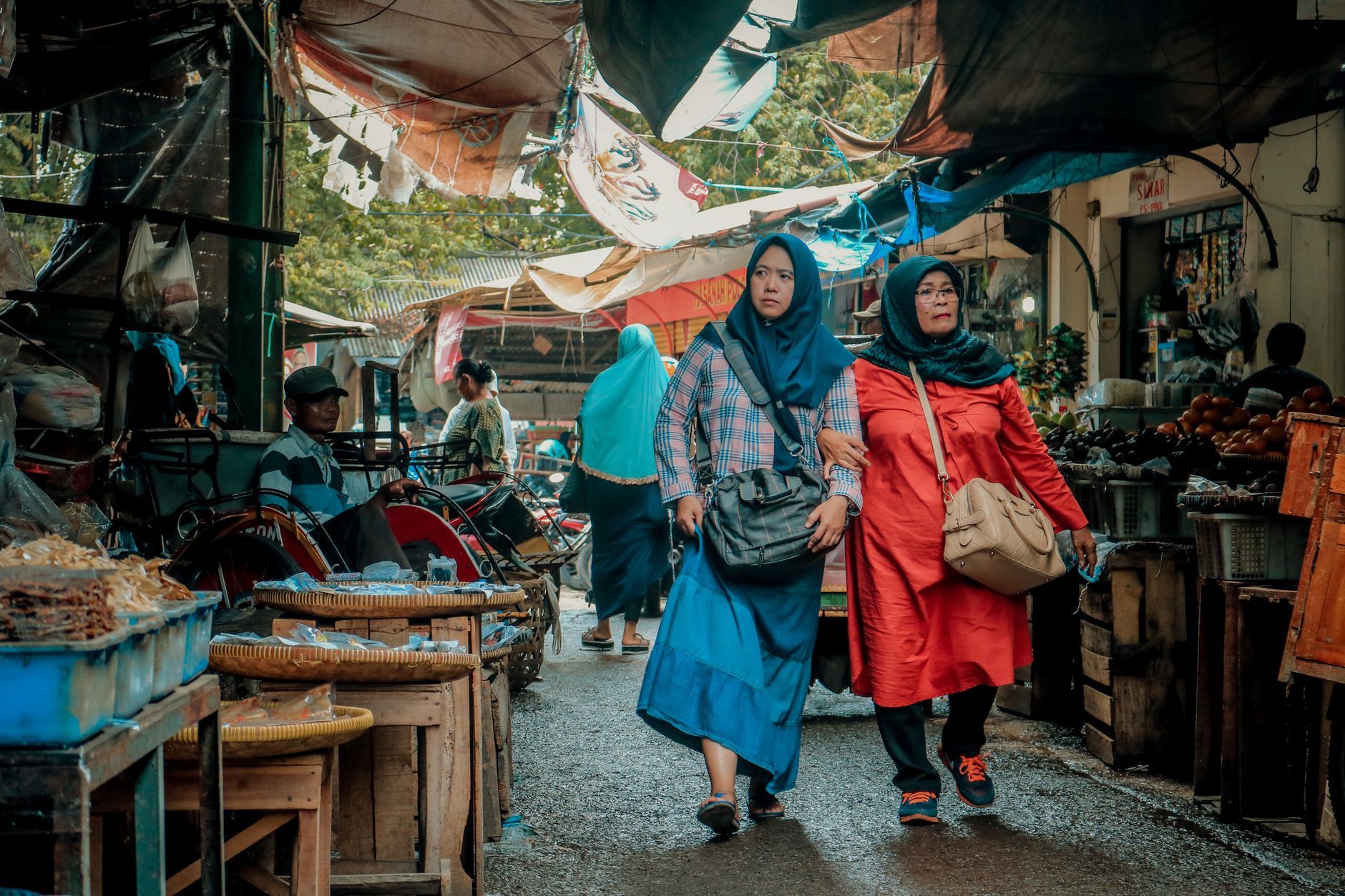
- Local markets, traditional warung, mechanics, real estate, healthcare — 10-30% English. Indonesian dramatically helps.
- With Grab/Gojek drivers, Warung owners, vendors — basic English works, but speaking Indonesian gets you better prices and friendlier service.
By trip duration — what's "worth it"
1-week tourist visit (Kuta + Ubud + day trips): Worth learning 20-30 essential phrases (~3 hours total). Skip the full course. Focus on:
- Greetings: Selamat pagi, Terima kasih, Sama-sama
- Numbers 1-100 for bargaining
- "Berapa?" (how much?), "Terlalu mahal" (too expensive)
- Food ordering: "Saya mau...", "Tidak pedas" (not spicy)
2-4 week trip: A1 level (50-100 hours, 1-2 hours/day) is the sweet spot. ROI: massive. You can:
- Negotiate prices that are 30-50% lower than the "tourist tax"
- Ask for directions to hidden beaches and warungs locals love
- Have small talk with your villa staff, your driver, your surf instructor
- Earn respect — Balinese light up when foreigners try Indonesian
1+ month, expats, digital nomads: A2-B1 level (150-300 hours) is essential. Without Indonesian:
- You'll always pay "bule prices" (foreigner premium, often 2-3x)
- You can't navigate KITAS visa renewal without an agent (€500-1500/year)
- You're locked out of local communities, friendships, dating
- You can't read contracts, lease agreements, healthcare forms
- You miss the cultural depth that makes Bali worth living in
€20 → €8 for a sarong at Ubud market
After bargaining in Indonesian instead of English. Same product, 60% cheaper.
€50/night villa → €30/night
Long-term rental negotiated in Indonesian. Locals offer "harga lokal" (local price) when they see effort.
Visa agent: €800 → DIY: €60
Renewing your KITAS yourself requires reading Indonesian government forms. Major savings.
Friendly drivers become friends
Many Grab/Gojek drivers offer to be your private driver for €30/day if you connect in Indonesian.
You stop being treated as a tourist
Balinese shopkeepers, warung owners, and neighbors include you in conversations once you can chat.
Indonesia has been "discovered" by tourists for 50+ years. Many Balinese have served thousands of foreigners who never bothered learning a single word. The bar is low — and that means the reward for trying is huge.
Saying just "Selamat pagi, apa kabar?" with a smile triggers a visibly different response than "Hello, how are you?" — Balinese stop, smile genuinely, and treat you as someone who respects their culture rather than a wallet on legs.
What seasoned expats say
- "Indonesian is the cheapest investment with the highest ROI in Bali." — Common refrain among long-term residents.
- "You'll be a tourist forever without it." — Honest assessment from digital nomads who lived in Bali for 2+ years.
- "Your Bali experience triples in depth." — From travelers who learned A2 before a 3-week trip.
The Balinese-vs-Indonesian question
In Bali, locals speak both Balinese (regional language, ~3 million speakers) and Indonesian (national language, taught in schools). With other Balinese, they switch to Balinese; with you, they'll use Indonesian. Learn Indonesian, not Balinese — it's much more useful and works across the entire archipelago.
Bonus: knowing a few Balinese words like "Suksma" (thank you) and "Om Swastiastu" (Hindu greeting) on top of Indonesian impresses everyone.
Will I be understood with just English in Bali?+
Yes, in tourist areas (Kuta, Seminyak, Ubud, Canggu). No, in real Indonesian neighborhoods, north Bali, traditional markets, healthcare, and government offices. If your trip stays in tourist zones, English suffices. If you want to leave them, Indonesian unlocks everything.
How long before I can hold a basic conversation?+
For travel-ready A1: 50-100 hours of study (1-2 months at 1 hour/day). For real conversational fluency (B1): 6-9 months at 30 min/day. Indonesian grammar is so simple that even partial knowledge is immediately usable.
Should I learn Indonesian before going or once I arrive?+
Learn the basics before — it accelerates everything once you arrive. Aim for 30-50 phrases plus numbers before landing. Then continue daily once in Bali; immersion + classes (€5-8/hour with a local tutor) is the fastest path.
Is it true that Indonesian is "the easiest Asian language"?+
Yes — confirmed by FSI rankings (Category II, ~900 hours vs Mandarin/Japanese at ~2,200). No tones, Latin alphabet, no verb conjugations, no grammatical gender. Most adults can hold a basic conversation in 6-8 weeks of consistent practice.
Will Balinese be offended if I only speak English?+
Not offended — but you'll get the standard "tourist treatment" (higher prices, surface-level service). Balinese culture values respect and effort, so even attempting Indonesian shifts the dynamic from transaction to genuine human interaction.
Ready before your next Bali trip?
IndoLingua\'s "Bali travel" track gets you to A1 in 4-8 weeks. 180 progressive lessons, native audio, real-time translator. Free plan: 10 lessons. Full 3-day trial: card required, nothing charged during the trial.
Start learning free