At Indonesian markets and with street vendors, bargaining (menawar) is expected. Ask the price with "Berapa harganya?", then counter with "Boleh kurang?" (can you lower it?) and "Terlalu mahal" (too expensive). Start at roughly 40–50% of the first price and meet in the middle. The strongest move is to smile, say "Tidak jadi, terima kasih" (not today, thanks) and start walking — the real price often follows. Never bargain in fixed-price shops, supermarkets or warungs.
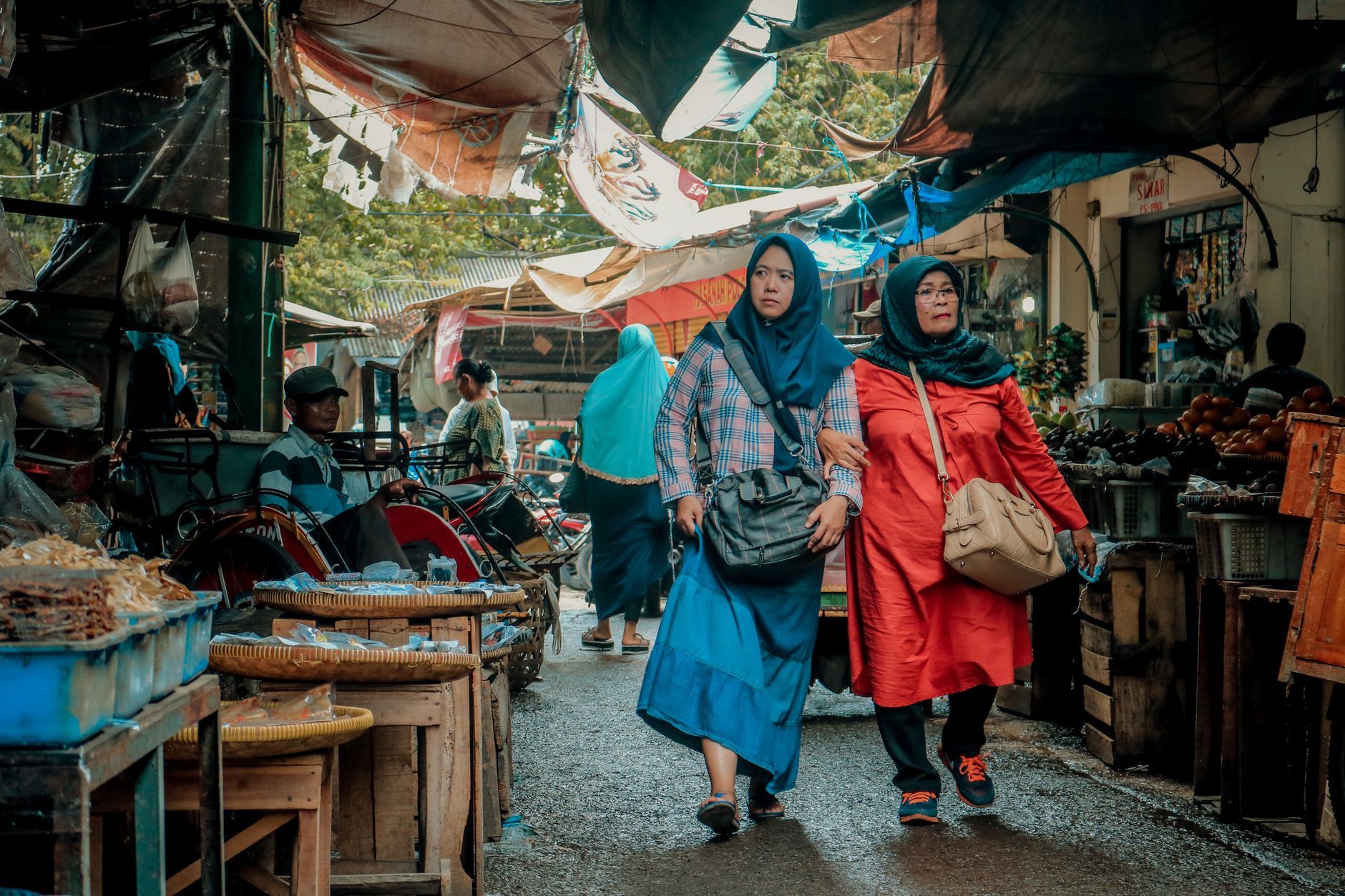
Bargaining is a friendly social game in Indonesia, not a fight. At traditional markets (pasar), art markets, beach vendors and souvenir stalls, the first price quoted to a tourist is often 2–3× the real value — haggling is simply how you find the fair price. Keep it light and smile the whole time.
How much to offer: counter at about half the opening price, then settle somewhere around 60–70% of it. If the vendor accepts your first offer instantly, you probably went too high — but it's only a few thousand rupiah, so don't agonise.
The walk-away is your best tool. A polite "Tidak jadi" (I'll leave it) and a slow step away tells the vendor your limit. If the price was real, they let you go; if there was room, they call you back. Buying several items? Ask for "harga teman" (friend price) or a bundle discount.
Where NOT to bargain: minimarkets (Alfamart/Indomaret), malls, supermarkets, restaurants and warungs all have fixed prices. Bargaining there is awkward, not savvy. Transport is also fixed if you use Grab/Gojek.
You: "Berapa harganya, Bu?"
"How much is it, ma'am?"
Bu / Pak = polite address for an older woman / man
Vendor: "Dua ratus ribu."
"Two hundred thousand."
Rp 200,000
You: "Wah, terlalu mahal. Boleh kurang? Saya kasih seratus ribu."
"Wow, too expensive. Can you lower it? I'll give one hundred thousand."
Vendor: "Seratus lima puluh, harga terakhir."
"One hundred fifty, final price."
You: "Hmm, tidak jadi, terima kasih." (start to walk)
"Hmm, I'll leave it, thanks."
The walk-away — often gets the real price
Always smile and stay relaxed. Aggression or mocking the price is rude and ends the game. A few rupiah means far more to a local vendor than to you — once you agree a price, you buy; don't back out for sport.
Bargain hardest where there are many identical stalls (art markets, beach sellers). At a single craftsman's stall, the margin is thinner, so be gentler. And if you genuinely love the item, paying a little "too much" still supports a real person — that's not a loss.
Is bargaining rude in Indonesia?+
No — at markets and with street vendors it's expected and even fun, as long as you smile and stay friendly. It's only inappropriate in fixed-price shops, malls, supermarkets and warungs.
How much should I offer first?+
Counter at roughly half the opening price, then settle around 60–70% of it. The exact number matters less than staying polite and being willing to walk away.
What's the single best bargaining phrase?+
"Boleh kurang?" (can you lower it?) opens the negotiation, and "Tidak jadi, terima kasih" (I'll leave it, thanks) while walking away closes it in your favour.
Where should I never bargain?+
Minimarkets (Alfamart/Indomaret), supermarkets, malls, restaurants and warungs — all fixed price. Also avoid haggling over small food/drink amounts.
Do I need to speak Indonesian to bargain?+
A few words go a long way and instantly get you better prices. Numbers, "berapa?" (how much), "terlalu mahal" (too expensive) and "boleh kurang?" cover most of it.
Bargain like a local — learn the numbers first
Master Indonesian numbers, prices and polite phrases with IndoLingua's lessons and native audio, and never overpay at a market again.
Start learning Indonesian