Yes — basic Indonesian dramatically improves expat life in Jakarta. While international offices and Pondok Indah/Kemang expat enclaves operate in English, you will encounter Indonesian daily with drivers, household staff, supermarket cashiers, hospital reception, neighborhood interactions, ojek/Grab apps, and most government services. The realistic goal is A2 level in 3-6 months: enough to manage a household, navigate emergencies, give clear directions, and earn respect from Indonesian colleagues. Jakarta-specific slang (Bahasa gaul) becomes useful for younger Indonesian friends and informal contexts.
Jakarta is Indonesia's 30-million-person megacity, the political capital, and home to ~200,000+ foreign residents. Unlike Bali (tourist-driven, English-heavy), Jakarta is a working capital where Indonesian is the dominant language for everyday interaction.
Where you actually need Indonesian in Jakarta
- Household staff — pembantu (maid), supir (driver), tukang kebun (gardener), satpam (security). Most speak limited or no English.
- Ojek and Grab drivers — even with the app, you may need to clarify destinations, traffic detours, or call ahead.
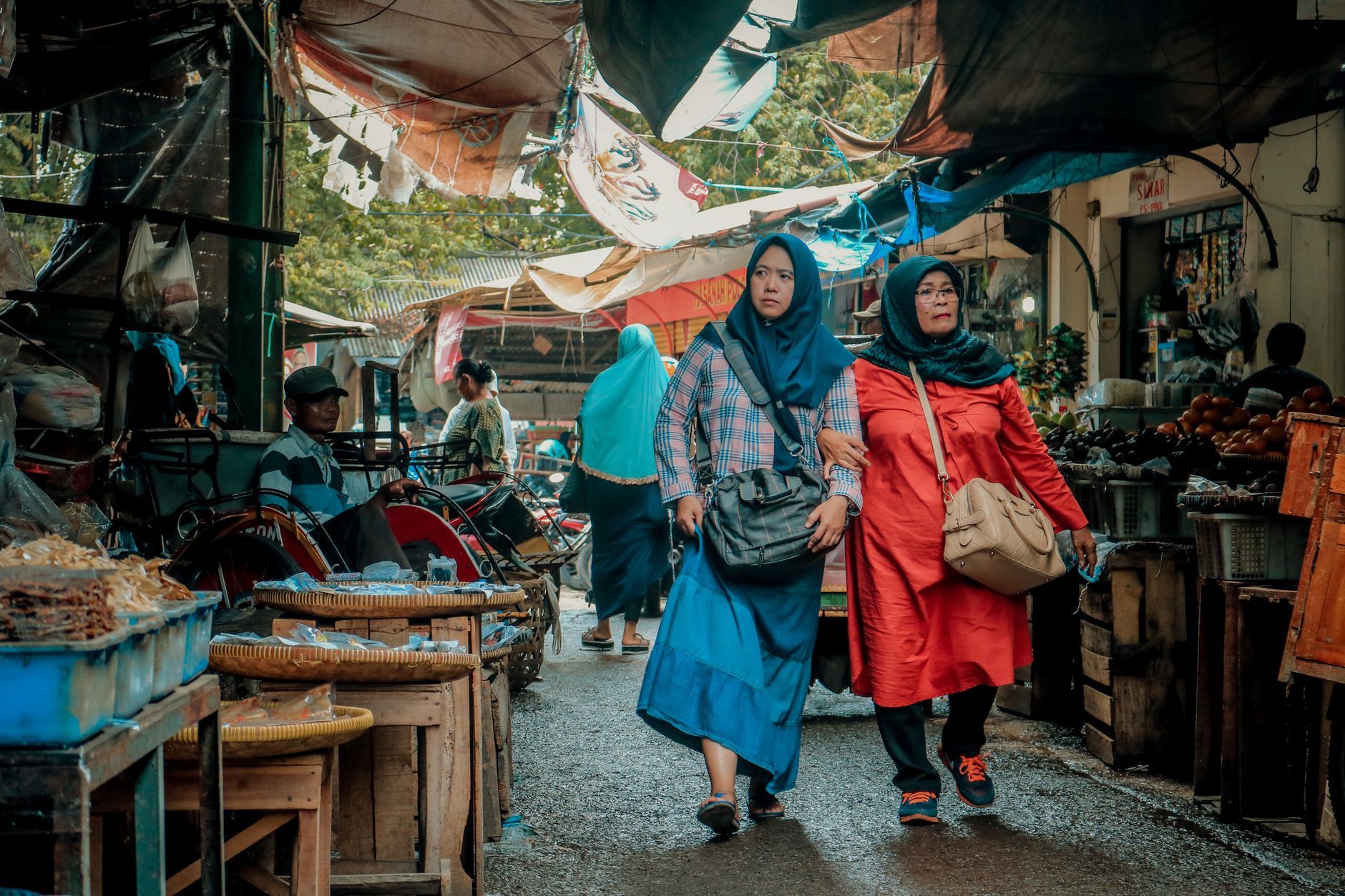
- Traditional markets (Pasar Tanah Abang, Pasar Mayestik) — far cheaper than malls. Indonesian = better prices.
- Public hospitals and pharmacies — Indonesian essential for symptoms, prescriptions, emergencies.
- Children's schools (if you choose local/national+) — parent-teacher communication in Indonesian.
- Apartment management and landlords — repairs, billing, neighborhood disputes.
- Immigration office, police interactions, banking — official processes go smoother in Indonesian.
- Local Indonesian friends — relationships deepen drastically when you can speak Indonesian, even imperfectly.
Where English usually works
- Multinational offices, banks, law firms.
- 5-star hotels (Sudirman, Kuningan, SCBD).
- Major shopping malls (Plaza Indonesia, Pacific Place, Grand Indonesia).
- International schools (JIS, BSJ, BIS — taught entirely in English).
- Expat-frequented restaurants in Kemang, Senopati, Menteng.
- Hipster cafés in SCBD/PIK with younger urban staff.
Realistic language goals by month
Month 1: Survival Indonesian
- Greetings + honorifics (Pak/Bu/Mas/Mbak)
- Numbers 1-1000 (essential for prices, addresses, phone)
- Time and dates
- Basic directions (kiri, kanan, lurus, putar balik)
- Polite refusals: "Tidak, terima kasih"
Months 2-3: Household management
- Pembantu/supir instructions: "Tolong dibersihkan", "Antar saya ke kantor", "Jemput anak jam 3"
- Shopping: "Berapa harganya? Bisa diskon?"
- Pharmacy/doctor: "Saya batuk, pilek, demam, sakit perut"
- Phone/internet provider: "Kuota habis, mau isi ulang"
Months 4-6: Working A2
- Office small talk: "Bagaimana weekend Pak?", "Sudah makan siang?"
- Email/WhatsApp formal: "Bapak/Ibu yang terhormat, saya mohon..."
- Negotiating with landlord/agent: "Apa ada DP, bulanan, tahunan?"
- Reading WhatsApp groups (expat-Indonesian mixed group dynamics)
- Casual Bahasa gaul with younger Indonesian colleagues (banget, gue, lo, kepo)
Jakarta neighborhoods and language reality
- Kemang — expat heart. English fine for daily, Indonesian for staff and local warungs.
- Menteng / Cikini — older expat / diplomat area. Indonesian + French/Dutch common with elderly residents.
- Pondok Indah / Permata Hijau — suburban expat. English with neighbors, Indonesian with staff.
- SCBD (Sudirman Central Business District) — corporate, bilingual.
- PIK (Pantai Indah Kapuk) / PIK 2 — Chinese-Indonesian elite + expats. Mandarin + Indonesian + English.
- Tebet, Tanjung Duren, Cipete — local middle-class. Indonesian dominant, much warmer with foreigners who speak it.
Office and corporate Indonesian
Even in English-dominant offices, knowing certain Indonesian terms is essential:
- Bapak / Ibu — always for senior colleagues (Bapak Direktur, Ibu Manager).
- Rapat (meeting), laporan (report), tugas (assignment).
- Lembur (overtime — universal pain point).
- THR (Tunjangan Hari Raya) — mandatory religious holiday bonus, usually before Lebaran.
- BPJS Ketenagakerjaan — national social security / employment insurance.
- Cuti tahunan — annual leave. Cuti melahirkan — maternity leave.
The "Macet" reality
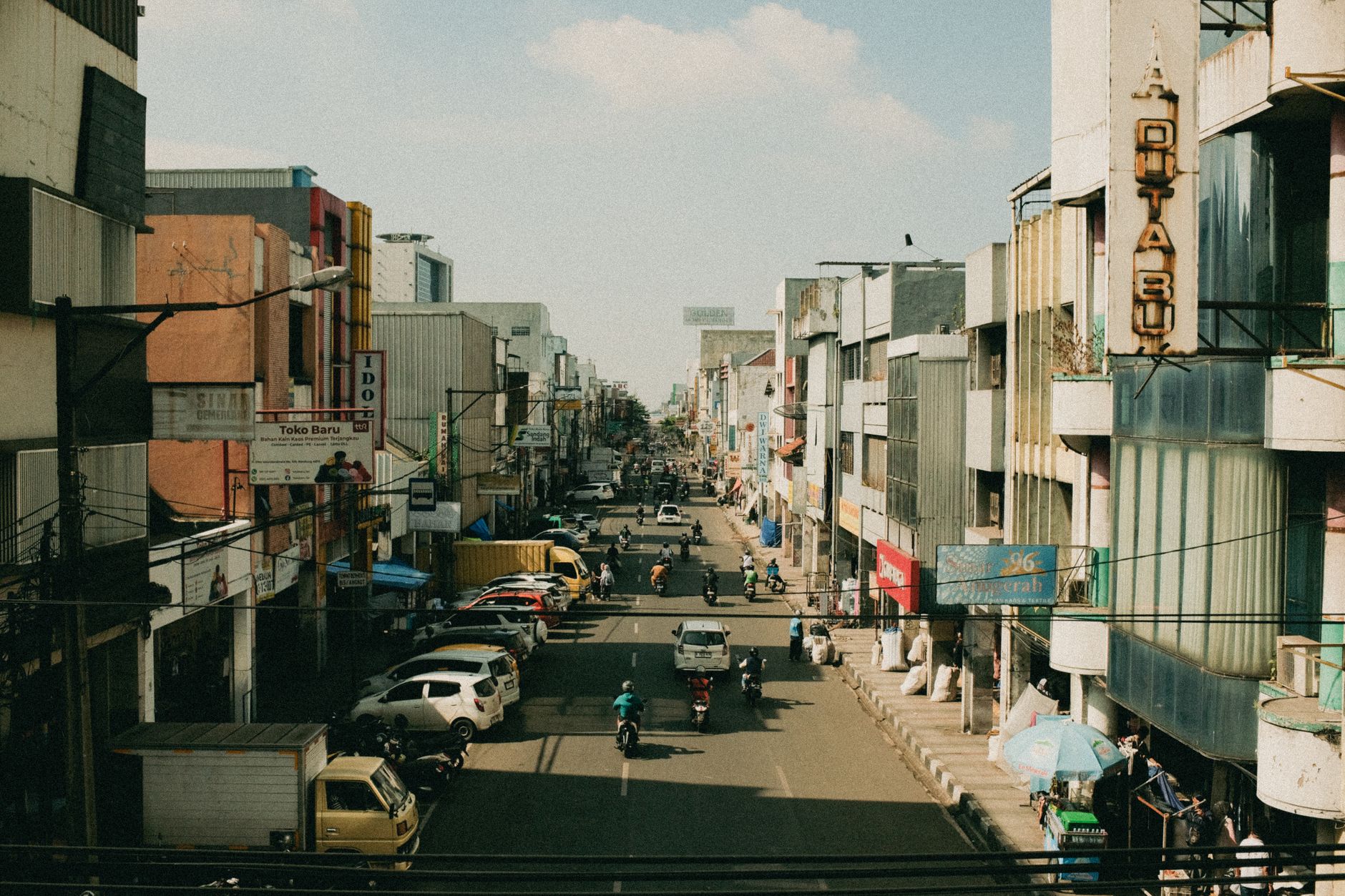
Macet means traffic jam — the single most useful Indonesian word in Jakarta. Every commute, dinner plan, school pickup, and meeting requires "macet" forecasting. Apps like Waze (popular here) and Google Maps help, but locals also share verbal updates: "Daerah Sudirman macet parah jam segini" (Sudirman is heavily jammed at this hour).
Briefing the supir: "Pak, antar saya ke kantor di Sudirman, terus jemput anak di JIS jam tiga sore. Hati-hati di jalan, kayaknya macet parah hari ini."
Sir, drop me at the office in Sudirman, then pick up the kid at JIS at 3 PM. Drive safely, looks like heavy traffic today.
Polite but specific instructions.
At Apotek: "Mbak, saya batuk dan pilek dua hari. Ada obat batuk yang tidak bikin ngantuk?" — "Ada, Pak. Yang ini non-drowsy. Mau berapa strip?"
Miss, I've had a cough and cold for 2 days. Any cough medicine that doesn't cause drowsiness? — Yes, sir. This one is non-drowsy. How many strips?
Pharmacy in Indonesian saves time vs explaining in broken English.
Meeting the landlord: "Pak, kontrak satu tahun ya. DP nya berapa, lalu bulanan kapan dibayar?" — "DP dua bulan, Mbak. Bulanan sebelum tanggal lima."
Sir, the contract is for one year, right? How much deposit, then when is monthly rent paid? — Deposit is 2 months. Monthly before the 5th.
Standard apartment negotiation.
Office WhatsApp: "Bapak/Ibu yang terhormat, mohon izin tidak hadir rapat hari ini karena anak sakit. Saya akan baca minutes-nya nanti."
Respected sirs/madams, please excuse my absence from today's meeting due to my child's illness. I will read the minutes later.
Formal WhatsApp/email register — important to master.
At Pasar Mayestik: "Ibu, satu kilo daging sapi giling. Harga berapa? Bisa kurang sedikit?" — "Tujuh puluh lima ribu, Mbak. Kurang ke tujuh puluh aja."
Ma'am, 1 kilo of ground beef. How much? Can you reduce a bit? — 75K, miss. I'll go down to 70.
Traditional market bargaining.
School parent-teacher chat: "Bu, nilai matematika anak saya turun. Ada yang bisa kami lakukan di rumah?" — "Sudah saya kasih remedial materi, Pak. Tolong dibantu latihan 30 menit sehari."
Ma'am, my child's math score dropped. Anything we can do at home? — I've given remedial material. Please help with 30 min/day practice.
Parent-teacher communication in Indonesian.
Jakarta has its own personality — different from Bali (Hindu, tourist), Yogyakarta (Javanese, calm), or Medan (multicultural, brash). Understanding the city shapes how to use the language.
Jakarta Indonesian (Bahasa Indonesia Jakarta)
Spoken Jakarta Indonesian (often called Bahasa Indonesia Jakarta or Bahasa Betawi-Indonesia) mixes:
- Standard Indonesian (Bahasa baku) for formal contexts.
- Bahasa Betawi — original Jakarta dialect, source of "gue/lo" pronouns and many slang terms.
- Bahasa gaul — modern urban slang, used by young Jakartans.
- English loanwords — "meeting", "deadline", "project", widely mixed in.
Don't feel obligated to use gue/lo as a foreigner — it can feel forced. Stick with "saya/Anda" or "saya/kamu" with friends, and you'll always be respectful.
The household help relationship
Many expat households employ a pembantu (asisten rumah tangga / ART). The relationship is hierarchical but warm:
- Address them by name + Mbak/Mas (never as "you" alone).
- Use "tolong" (please) for every request.
- Provide THR (religious holiday bonus, usually 1 month's salary) before Lebaran.
- Respect their religious schedule (5 daily prayers if Muslim).
- Expect "jam karet" (rubber time) flexibility — don't micromanage minutes.
Ramadan and Lebaran in Jakarta
Ramadan (the Muslim fasting month) transforms Jakarta:
- Iftar (breaking fast at sunset) = peak traffic 5-7 PM.
- Sahur (pre-dawn meal) ~3-4 AM — many warungs open then.
- Lebaran (Eid al-Fitr) = entire country closes for ~10 days. Mass exodus ("mudik") to home villages.
- Be prepared: staff travel, malls close earlier, traffic patterns shift dramatically.
Pet peeves of expats who don't learn Indonesian
- Endless miscommunication with supir over routes.
- Hospital visits where you can't describe symptoms.
- Cleaning instructions lost in translation.
- Mall vs traditional market price gap (~3-5x).
- Banking, BPJS, immigration paperwork delays.
- Feeling isolated from the 99% of Jakarta that operates in Indonesian.
The integration ladder
- Tourist (0 Indonesian) — bubble of expat compounds, hotels, malls. Limited experience.
- Survival expat (A1) — household + driver + warungs. Pays mall prices, occasional Indonesian friends.
- Functional expat (A2-B1) — manages life independently. Indonesian colleagues, weekend trips outside Jakarta.
- Integrated expat (B2+) — deep Indonesian friendships, family-level relationships with staff, can read newspapers, attend Indonesian-language events.
Each rung opens new opportunities — and most expats who stay 5+ years say their best Jakarta moments came after reaching B1.
Can I survive in Jakarta without Indonesian?+
Yes — in the expat bubble (Kemang, Pondok Indah, SCBD, international schools). But you will pay more, miss most local culture, and have shallow relationships with the Indonesians around you. Most expats who stay 1+ year regret not learning Indonesian sooner.
How long does it take to reach a useful level?+
With 20-30 min/day study + daily real-world practice, expect A1 (survival) in 1-2 months, A2 (functional) in 3-6 months, B1 (intermediate) in 9-15 months. Indonesian is one of the easiest languages for English speakers — no tones, no conjugations, no gender.
Should I send my kids to a local Indonesian school?+
Mixed answer. International schools (JIS, BSJ, BIS) are 100% English, easy transition. National Plus schools (e.g., Sekolah Pelita Harapan) teach in English + Indonesian — better cultural integration but harder if you don't support Indonesian at home. Pure national schools are rare for expats and require strong family Indonesian.
Is Jakarta Indonesian different from "textbook" Indonesian?+
Yes — significantly. Jakartans drop prefixes ("nggak" for "tidak"), use gue/lo pronouns (Betawi-origin), mix English freely ("aku capek banget today"), and abbreviate aggressively. Learn standard Bahasa Indonesia first; absorb Jakarta slang naturally through daily contact.
How do I talk to my supir politely?+
Use "Pak [name]" or just "Pak" if you don't use his name yet. Avoid "you" alone. Use "tolong" (please) for every request. Be specific with destinations and times. Don't shout when frustrated; lower your voice — Indonesian culture deeply values controlled tone. Tip with cash on Lebaran (THR) and holidays.
What's a "fluent expat" level?+
B2: you can hold complex conversations on any topic, write professional Indonesian emails, understand news broadcasts, and joke with Indonesian friends in Bahasa gaul. C1 (advanced) takes 3-5 years of immersion or intensive study. Few expats reach C1; B2 is usually the practical ceiling.
Make Jakarta your home — learn Indonesian that works
IndoLingua teaches Bahasa Indonesia for real expat life: office, household, hospitals, schools, markets. Not textbook drills. Free plan: 10 lessons. Full 3-day trial: card required, nothing charged during the trial.
Start learning free